During the COVID-19 lockdowns, graduating artists lost access to physical exhibition spaces. Degree shows are often a crucial moment for early career artists, however during lockdown they were cancelled entirely or heavily restricted, forcing artists and institutions to reconsider how work could be shared with the public.
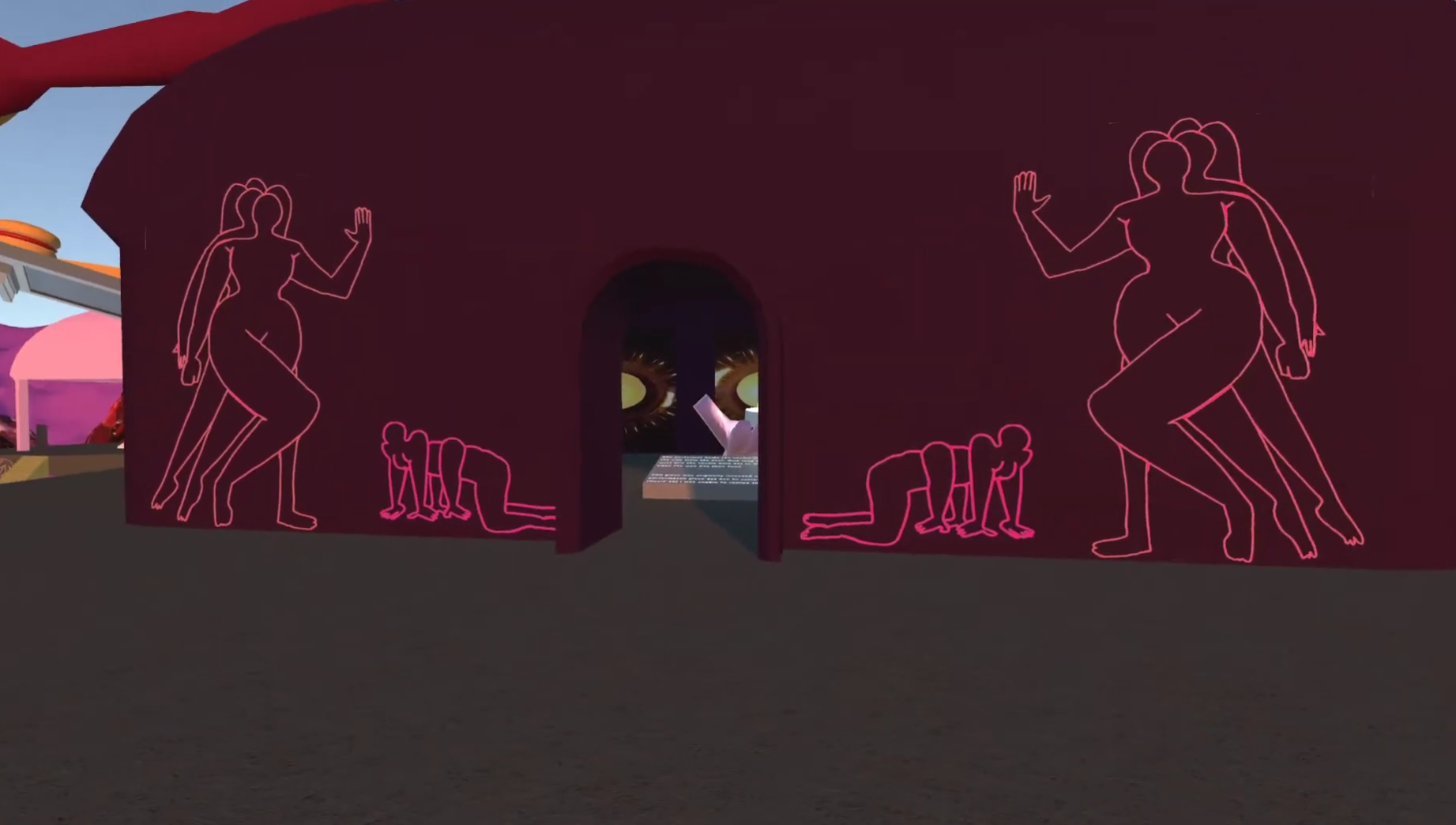
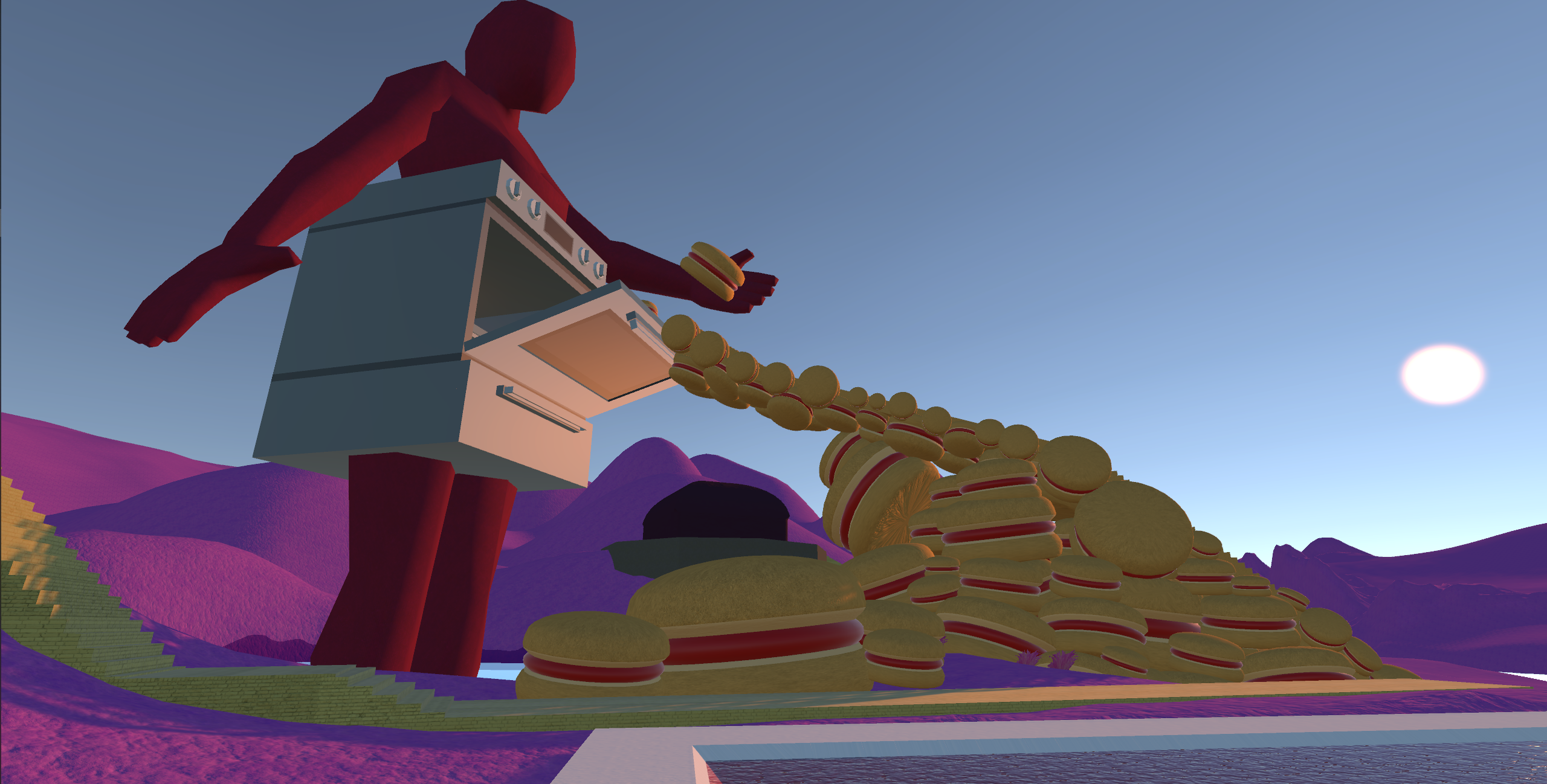
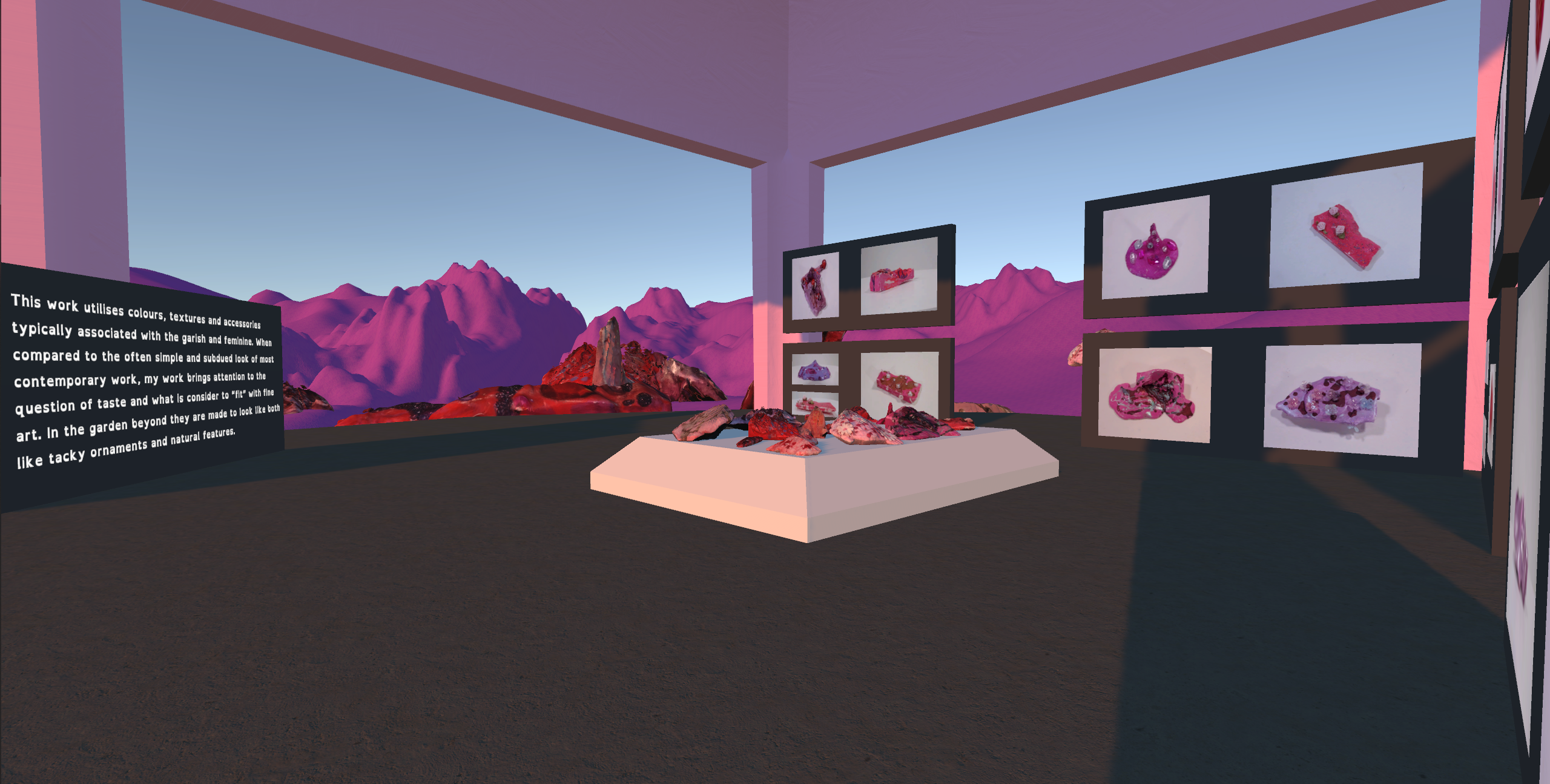
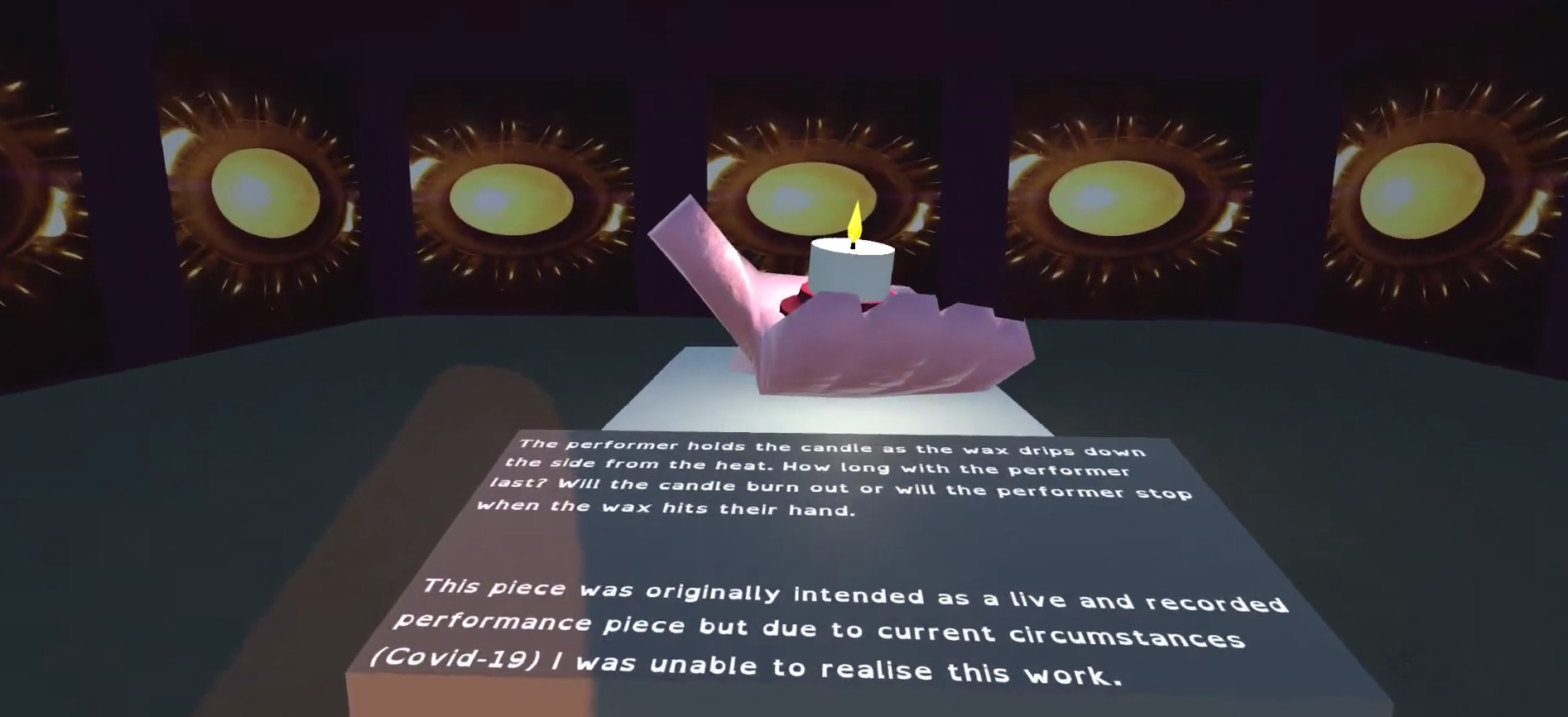
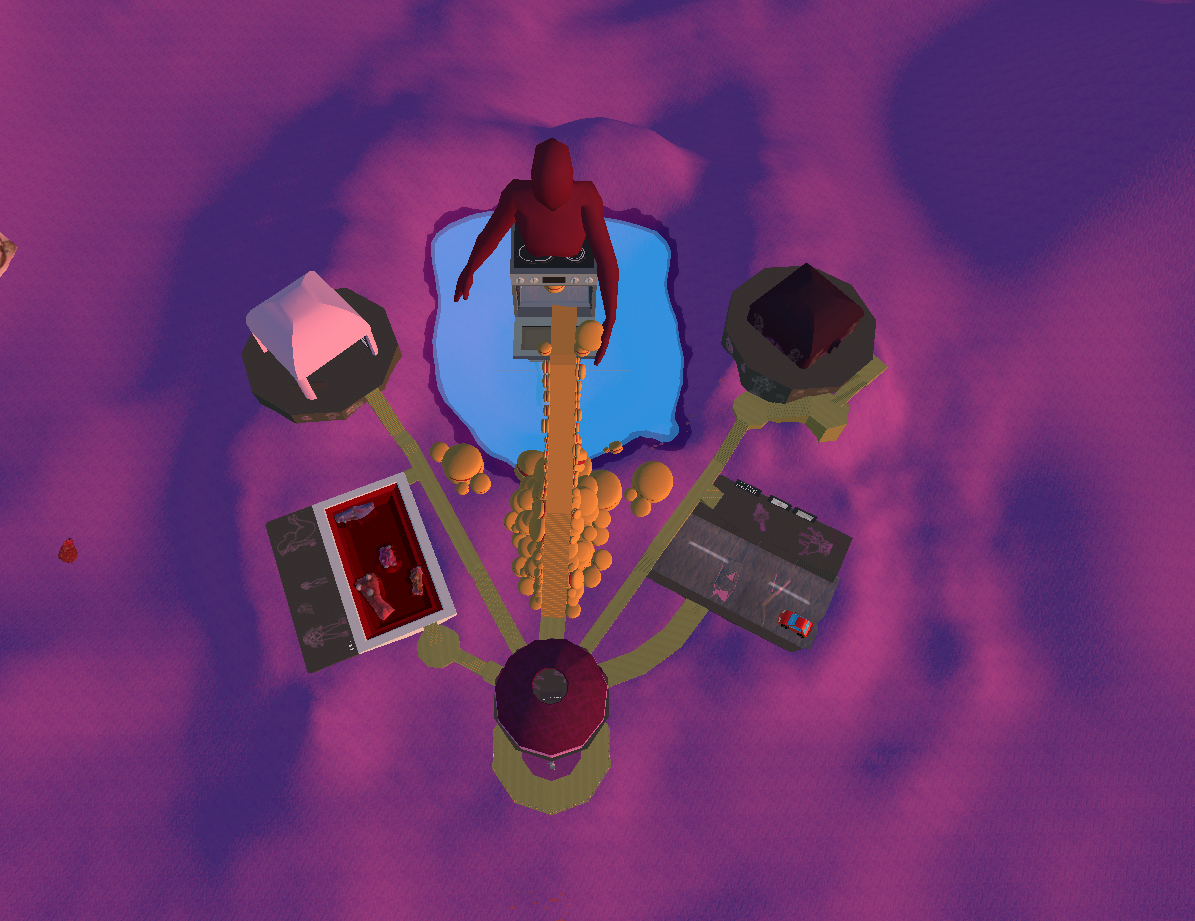
This project explored how game engine technology could support artists in presenting their work digitally. Working with UCA fine art student Eve Osborne, Brooke translated her physical artworks and exhibition concepts into a virtual environment built in Unity, creating a navigable digital gallery that audiences could explore online.
Rather than replicating a traditional white-cube gallery, the environment embraced the surreal logic of digital space: purple hills, floating images, and monumental sculptures created a world where Osborne’s playful and subversive work could exist beyond the constraints of physical exhibition.
The project asked a series of practical questions: how can artists exhibit work when physical galleries are inaccessible, how can physical artworks be translated into digital environments without losing their conceptual intent, and how might game-engine tools support independent artists working with limited resources? The challenge was not simply to recreate a gallery, but to design a digital space that felt intentional, coherent, and artistically meaningful.
The central challenge was translating artwork designed for physical exhibition and performance into a digital interactive environment.
Many of Eve Osborne’s works involve humour, performance, and absurd inventions in public space such as filling potholes with jelly as a playful critique of civic neglect. The virtual gallery needed to preserve this irreverent, playful spirit while allowing audiences to explore the work independently.
Key methods included:
• Photogrammetry scanning of physical objects
• Rapid 3D environment prototyping
• Collaborative translation of conceptual artwork into spatial design
• Iterative testing and development within Unity
Important constraints shaped the process:
• Remote collaboration during COVID lockdowns
• Limited access to studio facilities and equipment
• The sudden absence of physical exhibition infrastructure
These limitations encouraged experimental approaches to digital curation and exhibition design.